
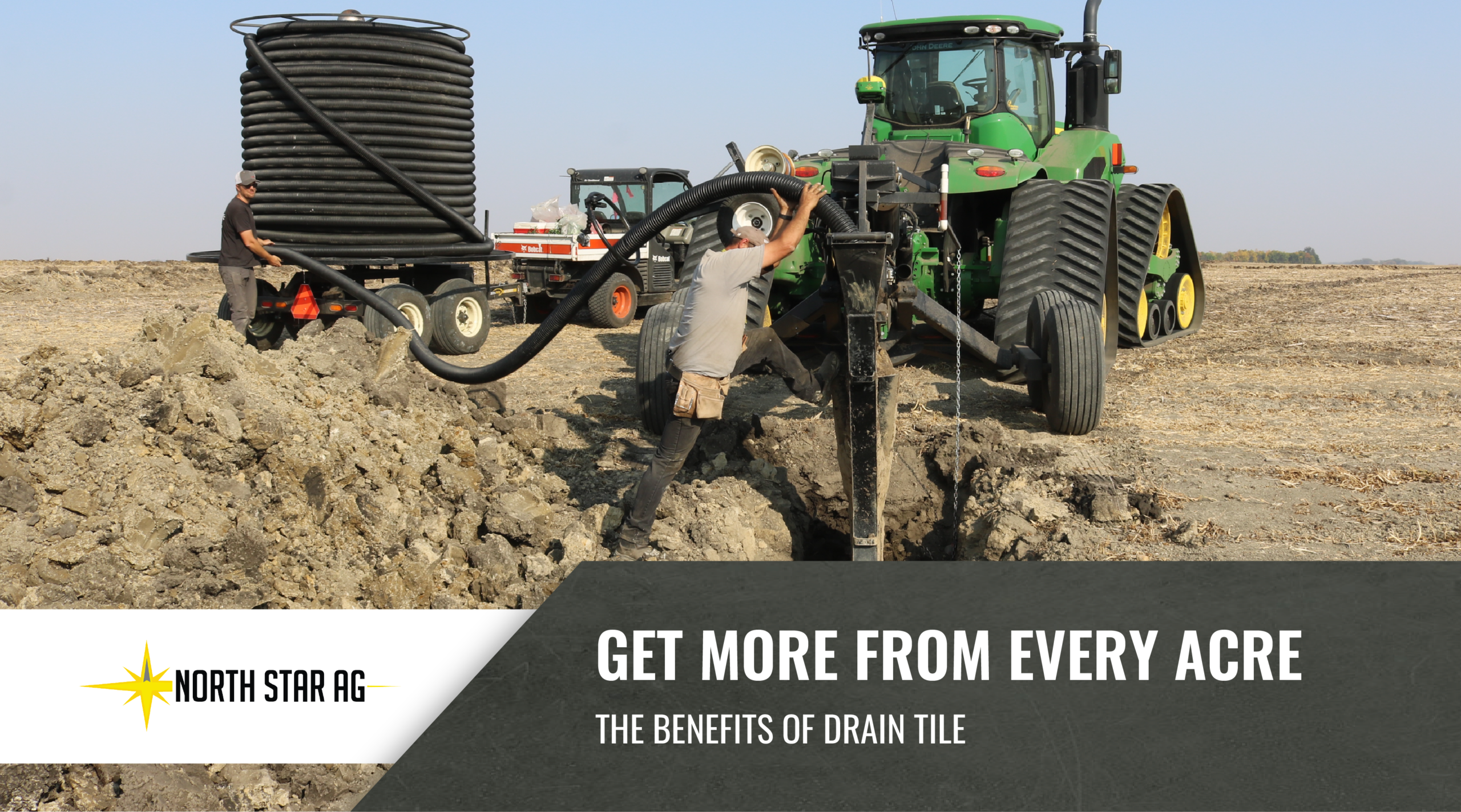
Wet springs, ponded low spots, and fields that never seem to dry out in time are a familiar story across North Dakota and western Minnesota. Drain tile is one of the most effective long-term fixes, and it’s no longer just an eastern Red River Valley practice.
We sat down with Jared, Drain Tile Lead at North Star Ag, to talk through what he’s seeing on farms and in our tile yard. One trend stands out:
“We’re watching the popularity and success of drain tile move west. It’s growing in areas that don’t have a lot of drain tile yet.” Jared, Drain Tile Lead, North Star Ag
Drain tile is a network of perforated pipe installed below the root zone that pulls excess water out of the soil profile and carries it off the field. The benefits of drain tile go well beyond a drier field, though. Here are seven ways tile drainage improves your yields, your soil, and the long-term value of your land.
1. Higher Yields from Tile Drainage
The biggest reason farmers tile is yield. When roots sit in saturated soil, they can’t get the oxygen they need, and the crop stalls out early. Tile drainage lowers the water table so roots can grow deeper and stronger.
Well-drained soils also have less yield swing from year to year, and the difference is often most noticeable in wet seasons. Your actual return depends on how poorly drained the field was to begin with and how much rain the season brings.
2. Warmer Soil and Earlier Planting
Wet soil holds cold. It takes far more energy to warm up saturated ground than drained ground, which is why untiled fields often lag behind in spring. In a region with a short growing season, those lost days add up.
Tilled fields dry out and warm up faster, so you can get in and plant on time. NDSU points to delayed planting as one of the biggest ways excess water cuts yield. Earlier, more even emergence gives your crop a better start and more of the season to finish strong.
3. Less Compaction and More Consistent Tillage
Running heavy equipment over wet ground is one of the fastest ways to build compaction, and compaction can hurt yields for years. When fields drain properly, you’re not forced to choose between waiting and rutting up your ground.
Tile drainage gives you more workable days and more uniform soil conditions across the field. That means more consistent tillage, a better seedbed, and fewer wet spots you have to work around or skip entirely.
4. Help with Salt and Saline Soil Issues
Saline spots are a common headache in North Dakota. When the water table sits high, water moves up through the soil, evaporates at the surface, and leaves salt behind. Over time, those white patches spread and crops struggle to grow.
Tile drainage lowers the water table, which slows that upward movement. With the water table down, rain and snowmelt can move salts back down through the soil profile and out through the tile. Reclaiming saline ground takes time, but drain tile is one of the most effective tools for turning it around.
5. Easier Harvest and More Efficient Applications
Drain tile pays off outside of planting season too. Drier fields in the fall mean fewer stuck combines and grain carts, less time spent pulling equipment out, and a harvest that stays on schedule.
The same goes for spraying and fertilizer. When you can get across the field when you need to, applications go on at the right time instead of whenever the ground finally firms up. Better timing helps your inputs do the job you paid for.
6. Turn Unprofitable Acres into Productive Ground
Most farms have a few spots that cost more to farm than they return. Low areas drown out, crops get stressed, and those acres drag down your whole field average. You’re still paying for seed, fertilizer, and fuel on ground that isn’t producing.
Tiling those problem areas reduces crop loss in wet years and brings them back into steady production. Instead of farming around trouble spots, you get more usable acres out of the land you already own or rent.
7. Higher Land Value and an Investment in the Next Generation
Drain tile is a long-term investment in the land itself. Tiled ground is more productive, more consistent, and more attractive to buyers and renters, which can increase its value.
Higher, steadier yields can also build your production history over time. NDSU notes that tile drainage can raise a producer’s APH, which carries benefits into future years. For family operations, tiling today is a way to hand down better ground to the next generation.
Get Your Drain Tile Project Started with North Star Ag
North Star Ag supports drain tile projects from planning to pipe in the ground. Our tile department has grown, with a dedicated team, significantly more inventory on hand, and expanded storage at the yard.
- Pipe: More small-diameter dual wall pipe and a wider variety of roll sizes
- Fittings: More depth and variety, with added storage to keep them stocked
- Steel culverts: 6″ to 24″ diameters in 10′ and 20′ sticks, plus couplers and flared end sections
- Erosion control and geotextile fabric: On hand for field projects, shop pads, and building sites
- Delivery: Additional trailers for deliveries straight from our yard
- Design and consulting: Help planning your system and ordering the right pipe and fittings
- SD Drain support: In-house help for farmers running their own tile plows with SD Drain software
Jared is especially excited about one of the newer additions:
“Erosion control and geo fabric aren’t something we’ve been known for. It’s relatively new, and after talking to ADS, it sounds like there’s a pretty good market out there for it. If you’re building a shop, you know you can get it here.” Jared, Drain Tile Lead, North Star Ag
Have questions about tiling your fields? Email [email protected], call 701-361-4790, or contact us online. We’re glad to talk through your ground and what a tile system could do for it.