
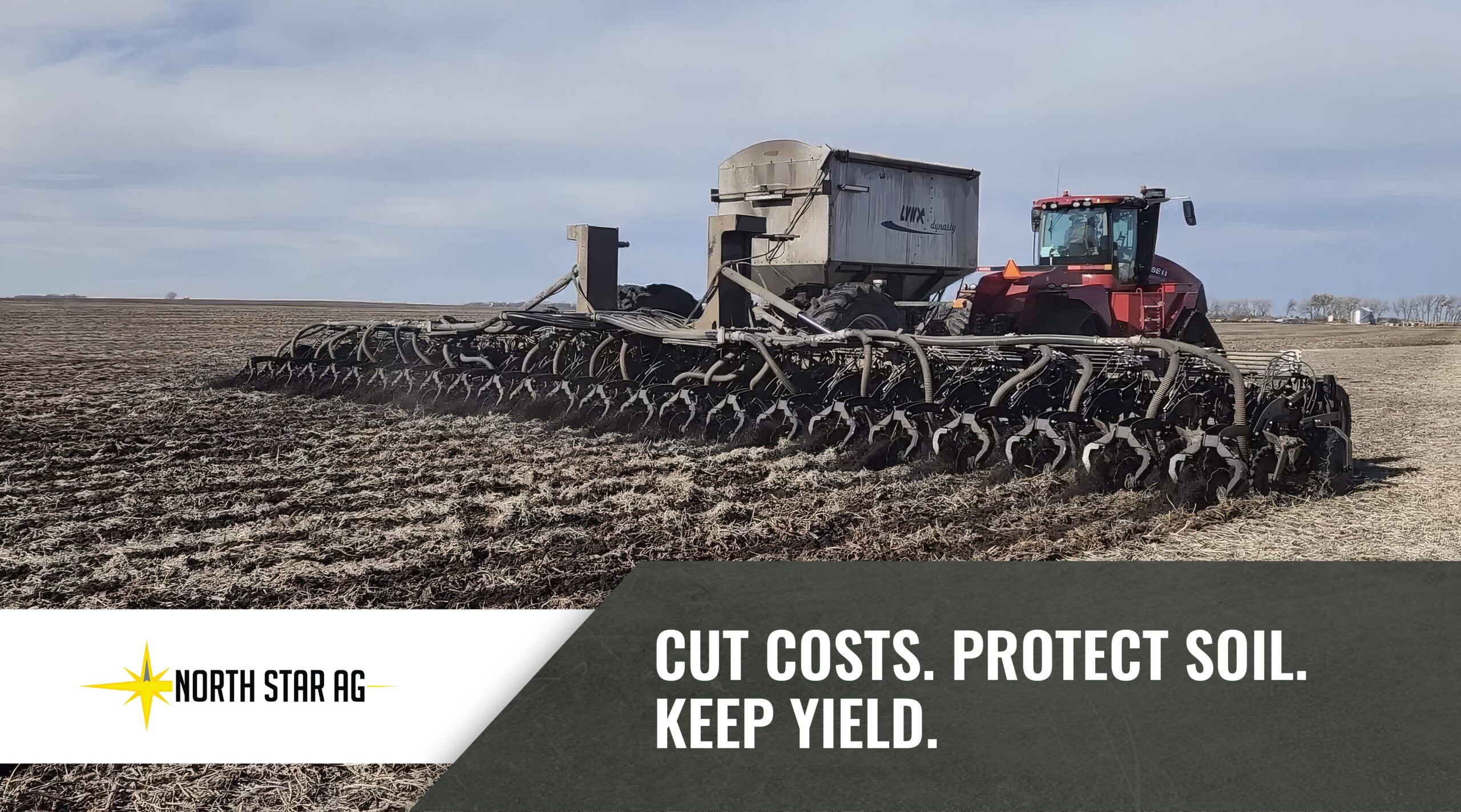
Thanks for checking out another blog from us at North Star Ag. Today we want to talk about a tillage practice that comes up in a lot of our conversations with customers: strip-till. More farmers across North Dakota and Minnesota are taking a hard look at strip-till, and it is easy to see why. It gives you a way to cut costs, protect your soil, and keep your operation efficient while increasing your yield.
If you are weighing whether strip-till makes sense for your acres, here is a breakdown of the biggest advantages, along with what to consider before you buy a bar.
What Is Strip-Till?
Strip-till is exactly what it sounds like. Instead of tilling the whole field, you till a narrow strip, usually 6 to 10 inches wide, right where the row will go. The rest of the field stays undisturbed, with last year’s residue left in place between the strips.
That combination, a clean seedbed where you need it and standing residue everywhere else, is what gives strip-till its advantages over both conventional and no-till systems.
The Agronomic Advantages of Strip-Till
1. Better Water Infiltration and Moisture Management
Residue left between the strips slows water movement across the field, so more of it soaks in instead of running off. Less disturbance also creates soil structure which helps water infilltrate. That same residue helps hold moisture in the soil during dry stretches later in the season. The black strip also dries out at a comparable rate to conventional till so you can still plant in a timely manner.
2. Improved Nutrient Placement
Because strip-till lets you band fertilizer directly in the strip at the time of tillage, nutrients end up closer to where the root zone will develop. That kind of placement tends to make more efficient use of the fertilizer you are already putting down. This increases efficiency and allows you to reduce your fertilizer rate.
3. Faster Warm-Up and More Consistent Emergence
A clean, tilled strip warms up and dries out faster in the spring than undisturbed ground, similar to conventional tillage, which can mean a better seedbed and more even emergence, while the rest of the field stays protected under residue.
4. Reduced Compaction and Better Soil Structure Over Time
Fewer full-width tillage passes means less equipment traffic compacting the soil. Combined with the biological activity that comes from leaving residue and roots in place, many operations see steady improvement in soil structure over several seasons.
5. Less Erosion
With most of the field left covered, strip-till fields hold up better against wind and water erosion than fields that are worked full-width. This helps protect your most important investment on the farm land.
The Economic Advantages of Strip-Till
1. Fewer Passes Across the Field
Strip-till often combines tillage and fertilizer placement into a single pass. Fewer trips across the field means less fuel, less labor, and less wear on your equipment over the course of a season.
2. More Efficient Fertilizer Use
Banding fertilizer directly in the strip, instead of broadcasting it across the whole field, lets you put the nutrients where the crop can actually use them. Over time, that precision gives a lot of operations room to fine-tune their input program rather than guessing at a flat rate across every acre. This can lead to a reduction in fertilizer use.
3. A Long-Term Investment in Soil Health
Less disturbance and more residue on the surface add up over the years. Farmers who stick with strip-till often tell us the payoff shows up gradually, in more consistent yields, and more organic matter, and better soil structure.
Why Buy Your Strip-Till Bar from North Star Ag
We are proud to be the Upper Midwest’s strip-till destination, carrying name brands like Kuhn, Fast, Lynx, Yetter, Unverferth, and Dawn. Whether you are outfitting your first strip-till bar or upgrading to more rows, we carry the brands and configurations to match your operation.
A Few Questions to Ask Before You Buy
- How many rows and what row spacing is your planter?
- Do you need dry fertilizer, liquid, or both built into the bar?
- What horsepower do you have available to pull the bar you’re considering?
- What level of GPS technology do you plan to work with?
- Are you running fall strips, spring strips, or both?
- What crops are you strip tilling for/into?
Our team can walk through these questions with you and help match you to the right bar, row count, and configuration for your acres.
Have Questions About Strip-Till? Let’s Talk.
If you’re thinking about making the upgrade to strip-till, or just want to talk through whether it’s the right fit for your operation, give us a call at 701-361-4790 or contact us online. You can also browse our full strip-tiller inventory anytime.